Supreme Court
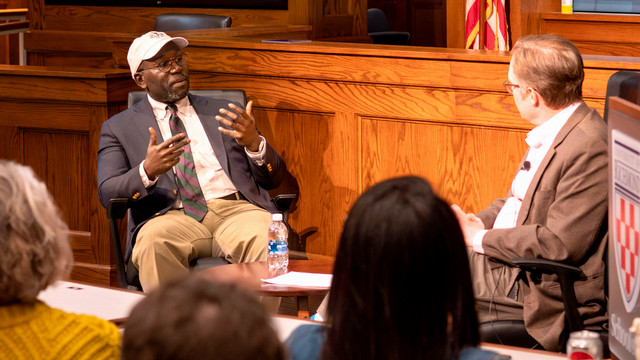
‘New York Times’ columnist Jamelle Bouie visits Richmond Law to talk about the Roberts Court
Some scholars call it a “conservative Warren Court.” Do you agree?
That descriptor makes a lot of sense to me. The Warren Court was trying to consolidate the New Deal order into constitutional law and was responsive to larger currents in American life. If you look at the Roberts Court as trying to consolidate the political transformations from Ronald Reagan through George W. Bush into the constitutional order, that frame makes sense.
Where it becomes complicated is President Trump. Roberts and the conservative majority seem to view Trump as a vehicle for advancing that constitutional vision, but in concentrating authority in the executive office and stripping away means of accountability, they may have enabled something very different from what they intended. Roberts has a larger, more sophisticated vision, but I’m not quite sure he understands the person he’s at the dance with.
What do you make of its lengthy opinions and multiple concurrences?
I don’t like the trend. I think the justices should take more cases, do more work, and write shorter opinions. Does the world really need an 80-page opinion on everything? Some of the Court’s problems stem from the fact that it simply isn’t doing enough work.
What direction would you like the Court to move in?
Over the long term, I would like to see the Court wield much less influence over American life. I consider it a problem that we have weighty debates about the structure of society in a courtroom rather than in a legislative chamber. In my ideal world, people shouldn’t even know the justices’ names.
How important is civic virtue to the constitutional system?
There’s only so much you can write into law or structure. No arrangement of government is going to save a republic if the people themselves are degraded. At a certain point, you need virtue.
Looking back over American history, movements for change were also moral arguments. They challenged the country to live up to its principles. Meaningful political change requires people and leaders who believe some principles matter and are willing to stand by them.