

n May, Scott Jones, L’09, was appointed a magistrate judge for the Abingdon Division of the Western District, filling the seat of retiring Magistrate Judge Pamela Meade Sargent.
With Jones on the bench as of Oct. 1, all three of the Western District’s magistrate judges are Richmond Law alumni — which is no surprise considering a significant percentage of Virginia judges are as well. The other two are C. Kailani “Kai” Memmer, L’92, and Joel Hoppe, L’02.
As magistrate judges, these three Spiders are on the front lines of the federal judicial system. They review both criminal and civil cases, but their responsibilities extend much further. Magistrate judges issue arrest and search warrants, summonses, and protective orders. They may also conduct bail hearings and determine conditions for release, and their offices are available around the clock for emergency decisions.
This diverse range of duties attracts attorneys of all stripes, with each magistrate judge taking a distinct journey to the bench.
Jones found his way there after serving as a federal career law clerk for 15 years. Before assuming the bench, Hoppe, of Charlottesville, clerked for two magistrate judges and practiced as a civil litigation and criminal defense attorney. Memmer, of Roanoke, worked at several Virginia law firms trying cases in both state and federal courts.
Each road, though different, gave these judges shared values through lines that go beyond their Richmond ties. Jones, Hoppe, and Memmer approach their work with humility, curiosity, and a deep sense of responsibility to all who appear before them.
Here, Virginia’s Western District magistrate judges share the values and thought processes that ground them through the many decisions they face every day.
“Magistrate judges are the judicial face of the court. They have the first interactions with the parties and the lawyers.”
LISTEN

One core belief fuels each judge’s approach: They are public servants and are accountable to every person who enters their courtrooms.
“Magistrate judges are the judicial face of the court,” Hoppe says. “They have the first interactions with the parties and the lawyers. As a judge, you have to listen to what they say, be patient, consider their arguments, and explain your rationale on the case that’s presented to you. It’s important that they feel like they’re getting their day in court and that they hopefully understand why the court is taking a certain action.”
Hoppe brings a first-person understanding of many of the players who come before him.
For much of his career, he worked as a lawyer for the Virginia Attorney General’s office and for the law firm Spotts Fain. In 2007, he began serving as an assistant federal public defender in the Western District.
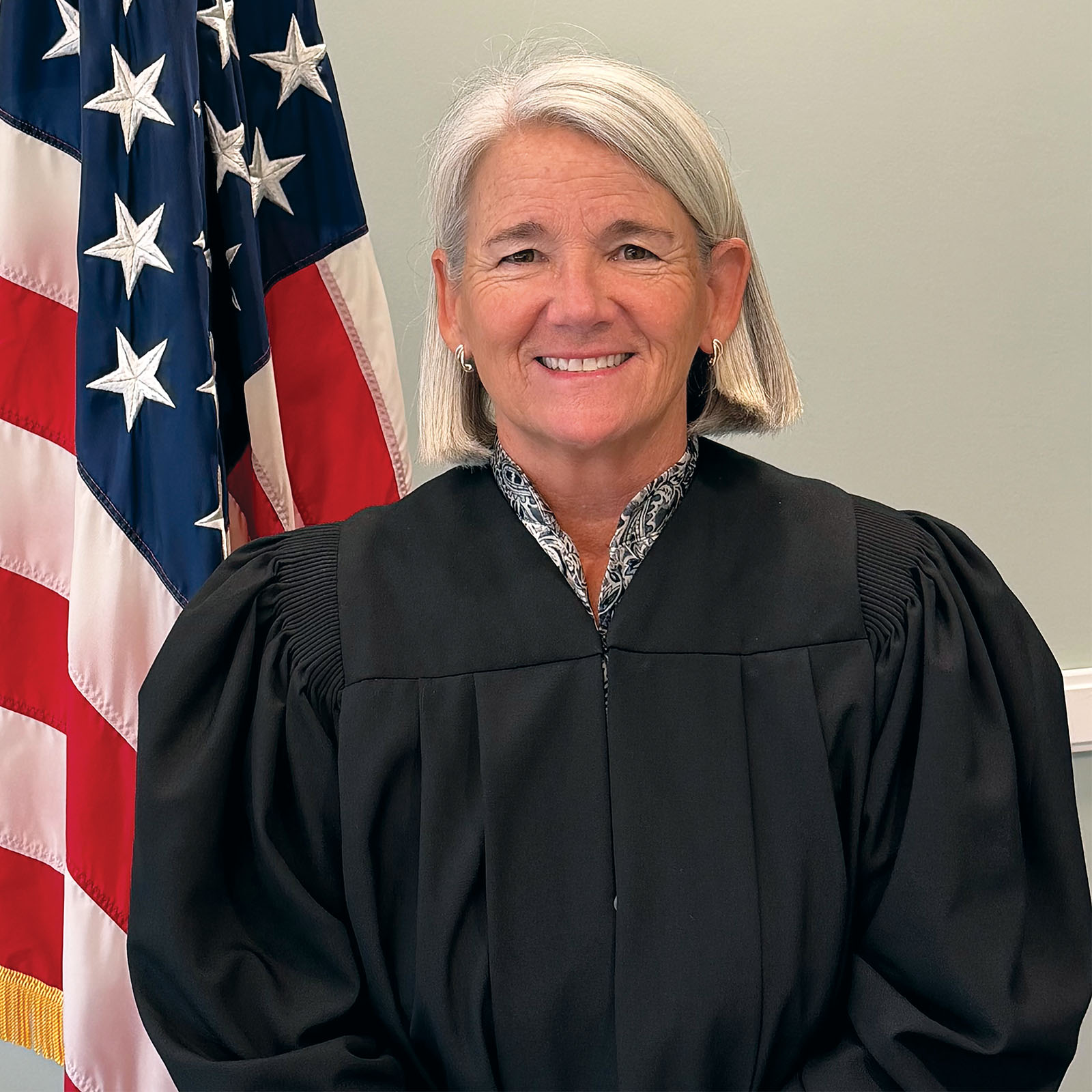
“I recognize that [criminal defendants] are scared. ... I try to always treat them with respect, courtesy, empathy, and professionalism.”
Hoppe also clerked for Magistrate Judge Pamela Meade Sargent in the Western District’s Abingdon Division shortly after graduating from law school and later in the Eastern District’s Richmond Division for Magistrate Judge M. Hannah Lauck, now the Chief United States District Judge in the Eastern District. Clerking required Hoppe to expand his scope, factoring in the arguments attorneys present along with his own research and legal analysis. He also grew to appreciate the judge’s role as a generalist with a high-level understanding of both civil and criminal law.
“You want to understand the case, which may be a little broader than the views of the parties involved,” Hoppe says. “As a judge, you’re not an advocate. You don’t have a stake in the outcome of the case, other than to make sure that it’s decided based on the facts — as they’re presented and as I understand them — and the law as I’m able to discern it.”
Memmer is aware of the fact that the people she sees — especially in a criminal case — are often experiencing one of the most difficult days of their lives.
“For criminal defendants, I’m the first face of the court that they see,” she says. “I recognize that they’re scared. Their families are often there, and they’re scared. I try to always treat them with respect, courtesy, empathy, and professionalism.”
LEARN
“I have always enjoyed calling the balls and strikes more than the litigation,” Jones says. “I liked being on the court side and helping judges as they do their research.”
Throughout the 15 years leading up to his appointment, Jones occupied that role as a career law clerk for Jackson Kiser and Thomas Cullen, both U.S. district judges.
Clerkship is an unconventional path to becoming a magistrate judge, one Jones himself didn’t expect to take. After graduating from Richmond Law, he clerked for Kiser in Danville, Virgina. He then worked at LeClairRyan in Richmond, where he practiced insurance defense and labor and employment law — until Kiser invited him to come back.
“It’s invigorating and exciting. I feel like a law student again. An intellectual curiosity and a willingness to challenge what I think I know has been helpful.”
“I don’t think many judges had career law clerks then, but I loved working for him, and I loved being in my hometown,” Jones says. “I accepted the job expecting it to be three or four years until he wanted to retire. Well, he was the ultimate public servant and worked until he died. Then Judge Cullen was confirmed and needed to staff up very quickly, so he asked me to stay on.
“What started as a short jaunt with Judge Kiser became an accidental career.”
Memmer says she came to the bench with considerable perspective after practicing law, but her “aperture has been blown super wide.”
For Memmer, every case is a chance to challenge her assumptions to make sure she’s doing justice and making fair decisions. She often turns to her career law clerk, Kelsey Martin Durkin, L’16, to help manage the flow of information and write opinions.
“It’s invigorating and exciting,” Memmer says of her time as magistrate judge. “I feel like a law student again. An intellectual curiosity and a willingness to challenge what I think I know has been helpful.”
ADAPT
A magistrate judgeship was always Memmer’s dream job. She just had to wait for the right position to open.
Her 31-year law practice started at Gentry Locke in Roanoke, where she focused on civil litigation. She says she was lucky to have tried many jury trials in state and federal court. She developed a statewide civil litigation practice and served as a partner at Glenn Robinson Cathey Skaff and White.
Then came her moment.
“These positions do not open up very often — particularly in the Western District, where we only have three magistrate judges,” she said. “But this is the best job in the world, and my expectations have been exceeded in every respect.”
Part of what Memmer loves about the role is its unpredictability. No two days — or hours — are alike. She has frequent contact with district judges in the area, regularly settling cases before they reach their courtroom. She works closely with lawyers and litigants, sometimes in daylong mediation sessions, where she helps untangle the issues in their case and reach a final agreement.
The job of a magistrate judge is also fast-paced and requires quick decision-making. It’s not uncommon, she says, to hear a case in the afternoon, receive a related emergency motion at 5 p.m., and draft an order in the same case that night. She equates it to triaging patients in an emergency room, with her job being to help move litigants on to the next step of the process.
“Whatever sense of perfectionism I had, I’ve had to let go of it,” Memmer says. “Some people need answers, they need decisions, and they need them quickly.”
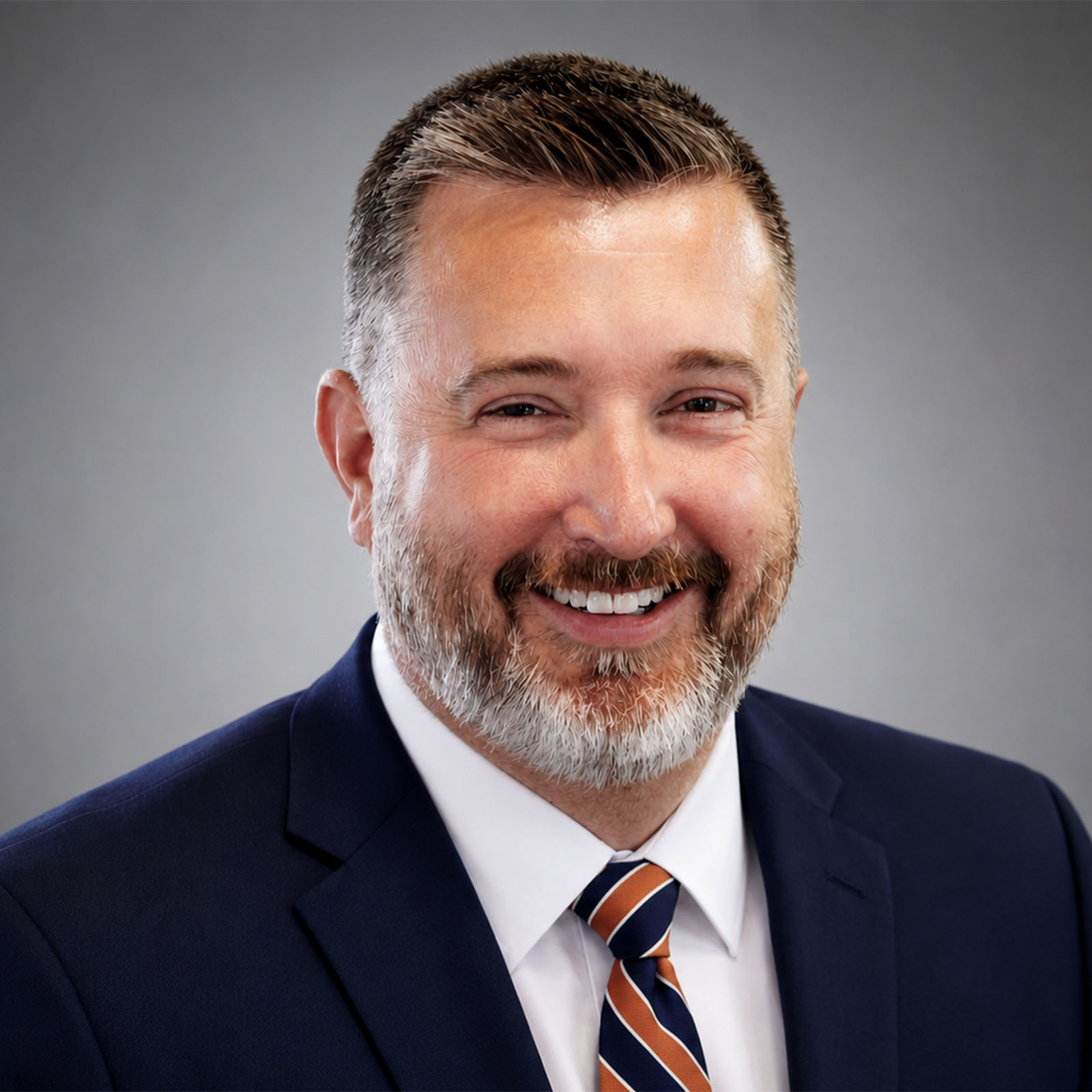
“I have always enjoyed calling the balls and strikes more than the litigation.”
In an effort to meet these needs, Memmer says she tries to emulate the magistrate judges she practiced under.
“They were always available to solve problems when strange issues came up, whether it was in the mediation context or not,” she says. “You could always pick up the phone and, for the most part, get a magistrate judge on the phone that day to help. That availability and accessibility was always important to me as a lawyer, and I’ve tried to never miss a call or not be available for lawyers or litigants.”
Hoppe also enjoys the variety. He presides over an array of cases, including initial appearances, bond hearings and arraignments in felony and misdemeanor offenses, civil mediation, drug court for Harrisonburg and Charlottesville, and meetings with agents seeking search warrants.
Some cases are more frequent in the region, such as misdemeanor offenses on federal property — “We have large national parks and forests where a lot of those cases come from,” he says — and a large prisoner civil rights docket. He also sees numerous employment cases and commercial disputes between businesses, both of which mirror his prior work in the attorney general’s office and in private practice.
On occasion, a case will take him by surprise. Hoppe once heard a case involving admiralty law — something more commonly seen in the Eastern District where Virginia’s naval bases are located.
“It was interesting to learn more about a different procedure for handling a case and the different considerations,” Hoppe says. “It’s not one I’m probably going to run into again, but it was a good learning opportunity.”
SUPPORT
A mentor’s guiding hand — and good advice from colleagues — laid the brickwork on each judge’s journey.
Hoppe had a chance to see the inner workings of a magistrate judge’s office during his clerkship with Sargent. He turned to her again — as well as now-District Judge Robert S. Ballou, who preceded Memmer — when he assumed the role.
Memmer, fittingly, learned from Hoppe when she was appointed in 2023, nearly 10 years into Hoppe’s tenure as magistrate judge. She also benefited from having Ballou and Michael Urbanski, another former magistrate judge-turned-district judge, in her Roanoke office building.
She says the relationships between magistrate judges are especially important in the Western District, where the geography of the region can make it more challenging to connect with one another.
“We communicate on different issues, especially the strange things that come up.”
“In some areas of the country, magistrate judges can walk into the next office to noodle over an issue with another judge,” Memmer says. “We’re separated in Abingdon, Charlottesville, and Roanoke. We have to find each other on the phone, which is hard when you look at our dockets. But we communicate on different issues, especially the strange things that come up.”
Now, Memmer is paying it forward as Jones begins his judgeship. When Memmer stepped onto the bench, she knew Sargent, Jones’ predecessor, would retire in the coming years. As she familiarized herself with the workflow and processes, she compiled a list of issues and resources to help Sargent’s eventual replacement.
“I have two former magistrate judges in my building that I can ask questions of,” she says. “But sometimes things move quickly, and it’s nice to have resources available or the standard operation procedures for certain things that come before us. Hopefully, that will help [Jones].”
Jones adds that he plans to spend next few months “being a sponge,” learning everything he can from his colleagues — and his fellow Spiders.
“We have a wealth of knowledge on our benches, and I hope to use as much of that as I can,” he says.